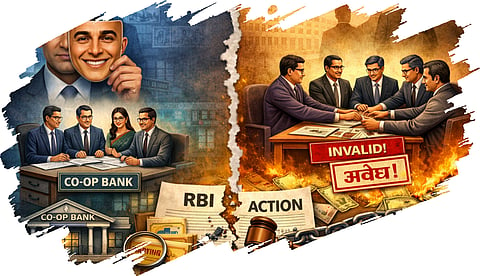


In some urban cooperative banks, this useful legal concept is being misused or turned into a mere formality. In certain cases, meetings of the Board of Directors and the Board of Management are being conducted together in an illegal manner, which has no legal basis. According to the governance guidelines of the Reserve Bank of India, it is very clearly stated that the Chairman of the Board of Directors cannot, under any circumstances, also serve as the Chairman of the Board of Management. This rule is strict and mandatory.
Those who fail to adapt with the changing times eventually fade away, this saying perfectly applies to today’s fast-paced and technology-driven banking sector.At one time, urban cooperative banks functioned purely on the noble principle of mutual support and social commitment. However, in the current era of globalization and digital transformation, banking is no longer just a social service; it has evolved into a highly complex and risk-intensive business.This business involves the hard-earned savings of common depositors, and safeguarding these funds is not merely a moral responsibility but also a statutory and legal obligation. Against this backdrop, the Reserve Bank of India (RBI) has strongly advocated the concept of a “Board of Management” (BoM) to bring about fundamental reforms in the governance of urban cooperative banks....(To continue, open the magazine)